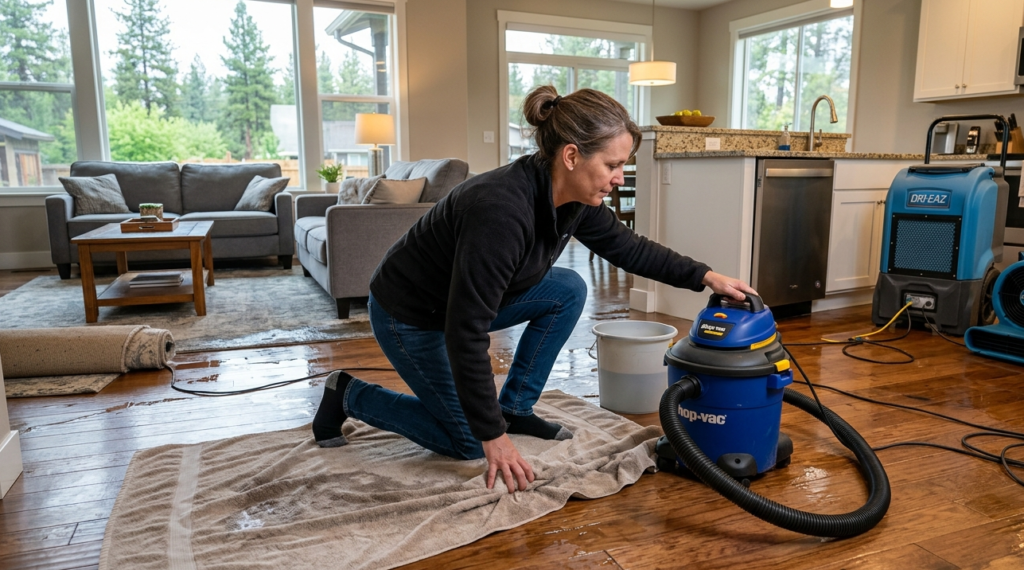
Spokane water damage problems are among the most stressful and financially devastating events a homeowner can face. In Spokane, WA, where heavy snowmelt in spring and sudden storms in summer put constant pressure on roofs, pipes, and foundations, the risk is year-round. Acting quickly and correctly in the first hours after water damage occurs can mean the difference between a straightforward water damage cleanup project and a months-long reconstruction project. Whether you’re dealing with emergency water damage from a burst pipe, appliance failure, or storm flooding, taking immediate action can save thousands in repair costs.
This guide walks you through exactly what to do – step by step – so you can protect your home, your health, and your wallet.
Why Speed Matters More Than Anything
Effective water damage control during the first few hours can significantly reduce repair costs and prevent secondary issues such as mold growth.
The first 24 to 48 hours after water damage are critical. According to the Institute of Inspection, Cleaning and Restoration Certification (IICRC), mold can begin growing on wet surfaces in as little as 24 to 48 hours under the right conditions. Once mold takes hold, remediation costs multiply significantly.
Beyond mold, standing water weakens drywall, warps hardwood floors, degrades insulation, and begins corroding structural materials. The longer water sits, the deeper it penetrates – and the more expensive your restoration bill becomes.
The moment you discover water damage in your Spokane home, the clock is already running.
Step 1 – Ensure Safety First
Before you do anything else, make the space safe.
Turn off electricity to the affected area at your breaker box. Water and electrical current are a lethal combination. If your breaker panel is itself in a flooded area and you cannot safely reach it, call your utility company to shut off power to the building.
Check for structural damage before re-entering rooms. Ceiling water damage, in particular, can cause sections to collapse without warning if saturated drywall becomes too heavy. If you see bulging, sagging, or discoloration spreading rapidly across a ceiling, exit that room.
If a burst pipe is the source, locate and shut off your main water supply valve immediately. Most Spokane homes have this valve near the water meter or where the main line enters the foundation.
Step 2 – Document Everything Before You Touch It
Proper documentation is one of the most important steps when filing water damage claims Spokane homeowners commonly submit after burst pipes, flooding, or roof leaks.
Call your insurance provider immediately, but before moving any furniture or pulling up any flooring, photograph and video everything. Walk through every affected room methodically. Capture water levels, the extent of soaking, damaged belongings, and the apparent source of the water.
The Federal Emergency Management Agency (FEMA) recommends keeping a thorough photographic record from the very beginning of any disaster event, as this documentation is essential for insurance reimbursement and federal assistance claims.
Do not discard any damaged items before your adjuster has reviewed them. Even items that seem unsalvageable need to be listed and documented.
Step 3 – Remove Standing Water as Fast as Possible
Fast water mitigation is critical because it limits the spread of moisture and reduces the amount of restoration work required later. Some homeowners search for water mediation services when looking for professional water mitigation and restoration assistance.
If the water intrusion has stopped and it is safe to enter, begin removing standing water immediately. Wet vacuums, mops, and towels can help with smaller amounts, but for significant flooding, professional water extraction equipment is far more effective.
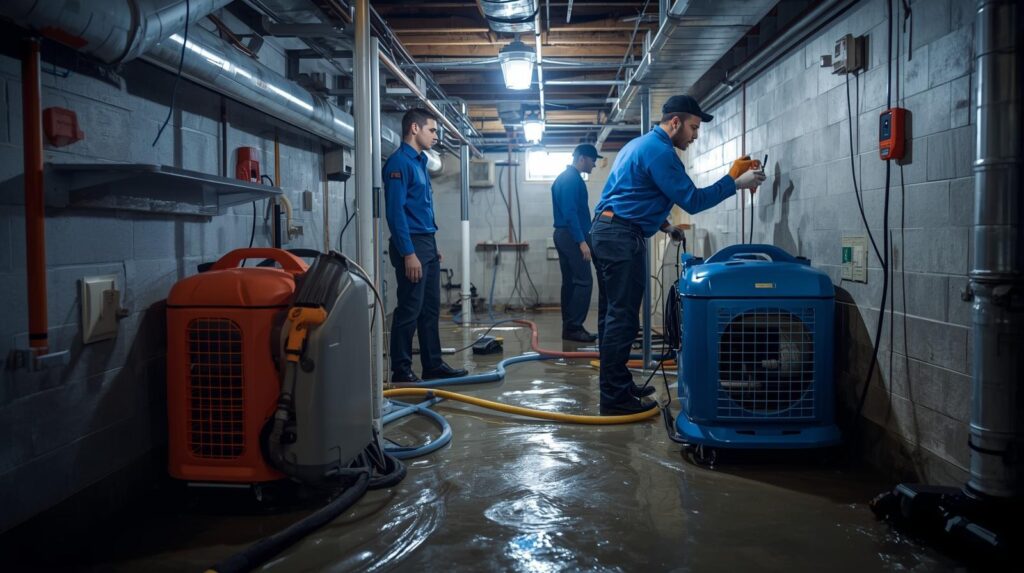
Our emergency water extraction services in Spokane use truck-mounted and portable extraction units capable of removing hundreds of gallons quickly – cutting off mold’s window of opportunity before it opens. Professional home flooding cleanup services are often necessary when several rooms are affected or standing water is extensive.
Step 4 – Dry the Structure Thoroughly
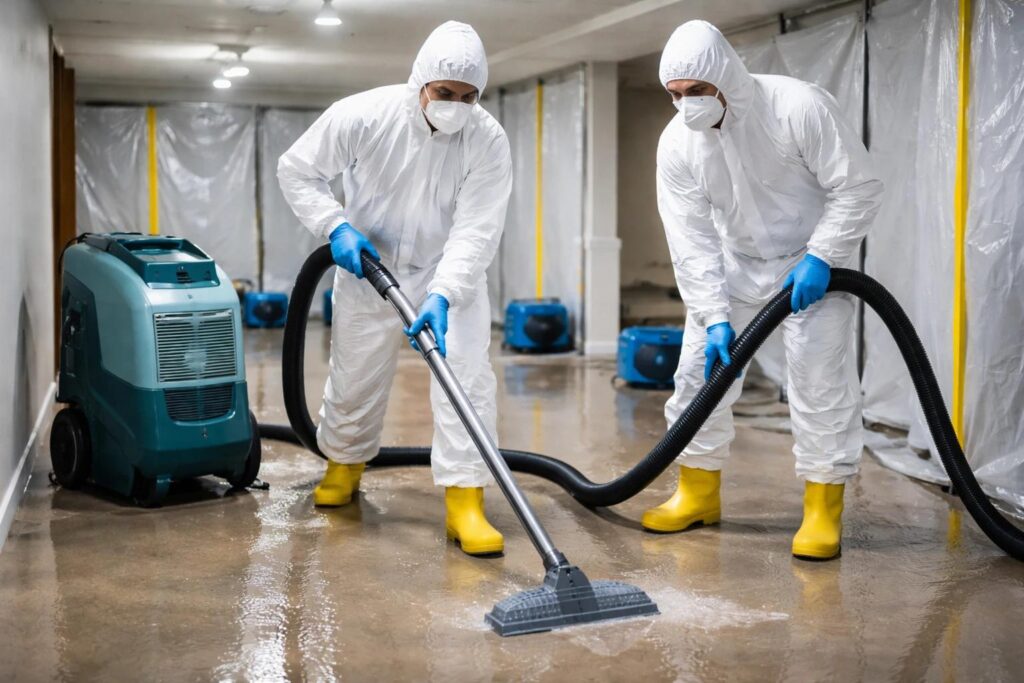
Removing visible water is only half the job. Moisture trapped inside wall cavities, beneath subflooring, and within insulation is invisible to the naked eye but every bit as dangerous. This is why professional drying is not optional – it is essential.
Industry-grade air movers and dehumidifiers push moisture out of building materials at a rate impossible to replicate with household fans. Certified technicians use moisture meters and thermal imaging cameras to map exactly where hidden dampness remains, ensuring no wet pocket is left behind.
For homeowners who attempt to dry on their own, the most common mistake is declaring victory too early. A wall that feels dry to the touch can still hold enough moisture to support mold growth inside the cavity for weeks.
Step 5 – Address Mold Before It Spreads
In severe cases, complete water remediation may be required to remove contamination, dry building materials, and restore safe indoor conditions. Some homes require extensive reconstruction after water damage, particularly when structural framing, drywall, flooring, or cabinetry cannot be salvaged.
If water has been present for more than 24 hours – or if you can already see or smell mold – professional mold remediation becomes part of the restoration process. Mold is not just an aesthetic issue. The Environmental Protection Agency (EPA) notes that indoor mold exposure can cause a range of health effects, including respiratory irritation, allergic reactions, and more serious complications for people with underlying conditions.
Our mold remediation team in Spokane follows IICRC S520 standards, using containment, HEPA air filtration, and safe removal protocols to address mold without cross-contaminating unaffected areas of your home.
Step 6 – Assess Water Damage Repair Needs and Structural Damage
Professional water damage repair often includes drywall replacement, flooring restoration, insulation replacement, and structural repairs after drying is complete.
Once the property is dry and any mold has been addressed, a full structural assessment should take place. This includes inspecting drywall for soft spots and staining, checking subfloor integrity, evaluating insulation for saturation, examining the foundation for new cracks or seepage points, and assessing roof decking if the source was a roof leak.
Repairs should always be completed before repainting or installing new flooring. Covering damage without resolving the underlying moisture issue is one of the most expensive mistakes homeowners make – it leads to recurring mold, pest attraction, and accelerated material breakdown.
Our water damage repair services in Spokane handle the full scope of restoration from structural drying through to final repairs, working with your insurance adjuster to document scope and costs accurately.
Common Sources of Water Damage in Spokane Homes
Understanding what causes water damage helps homeowners prevent future events. The most frequent culprits in the Spokane area include:
Burst and frozen pipes. Spokane winters routinely push temperatures below freezing, and pipes in uninsulated spaces – crawlspaces, exterior walls, garages – are highly vulnerable. When water freezes inside a pipe, the expanding ice can split even copper and PVC.
Appliance failures. Washing machines, dishwashers, and refrigerator ice-maker lines are among the top sources of slow leaks that go undetected for months before causing extensive subfloor and cabinet damage.
Roof leaks. Ice dams, aging shingles, and wind damage all allow water to enter the attic and eventually penetrate ceilings. What begins as a small stain can signal widespread decking rot above.
Sewage backups. Heavier rainfall overwhelms older municipal sewer systems, pushing effluent back through floor drains and toilets. Sewage backups are classified as Category 3 – the highest-risk water type – and require professional sewage cleanup and sanitation.
Foundation seepage. Saturated soil during spring snowmelt can push water through foundation cracks, particularly in homes with aging waterproofing.
Water Damage Doesn’t Only Happen in the Pacific Northwest
Homeowners across the country face similar challenges. Coastal and subtropical climates like South Florida deal with hurricane flooding, tropical storm surge, and extreme rainfall events that produce water damage on a massive scale. If you or someone you know is dealing with flooding in South Florida, water damage Port St. Lucie FL specialists offer the same 24/7 emergency restoration services tailored to Florida’s unique climate and storm patterns.
Why Certification and Standards Matter
Not every restoration company operates to the same standard. When choosing a water damage restoration contractor, look for certification from the IICRC (Institute of Inspection, Cleaning and Restoration Certification) – the industry’s leading credentialing body. IICRC-certified firms follow standardized drying protocols, use calibrated equipment, and employ technicians trained in the latest restoration science.
You should also verify that any contractor is licensed, bonded, and insured in Washington State. The Washington State Department of Labor & Industries maintains a public contractor lookup tool to verify credentials before you sign anything.
For insurance purposes, ask your contractor whether they document work to Xactimate standards – the estimating platform used by most major insurance carriers. Accurate Xactimate scopes reduce disputes and speed up claim settlement. Professional restoration of water damage requires specialized drying equipment, moisture monitoring, and repair expertise to ensure the property is fully restored.
Call Spokane’s Trusted Water Damage Restoration Team
When water damage strikes your Spokane home, every minute counts. Our certified team at Spokane Water Damage Restoration is available 24 hours a day, 7 days a week, with rapid response times across Spokane, Spokane Valley, and surrounding communities.
From emergency water extraction and structural drying to mold remediation and complete repairs, we handle every phase of restoration under one roof. We work directly with all major insurance providers and provide full documentation throughout the process.
Our team provides 24/7 emergency water clean up services throughout Spokane, helping homeowners minimize damage immediately after flooding or pipe failures.
Call (509) 508-5677 now for immediate assistance. Protecting your home starts the moment you pick up the phone. If you need 24 hour water damage Spokane services, our emergency response team is available day and night.
Leave a Reply