
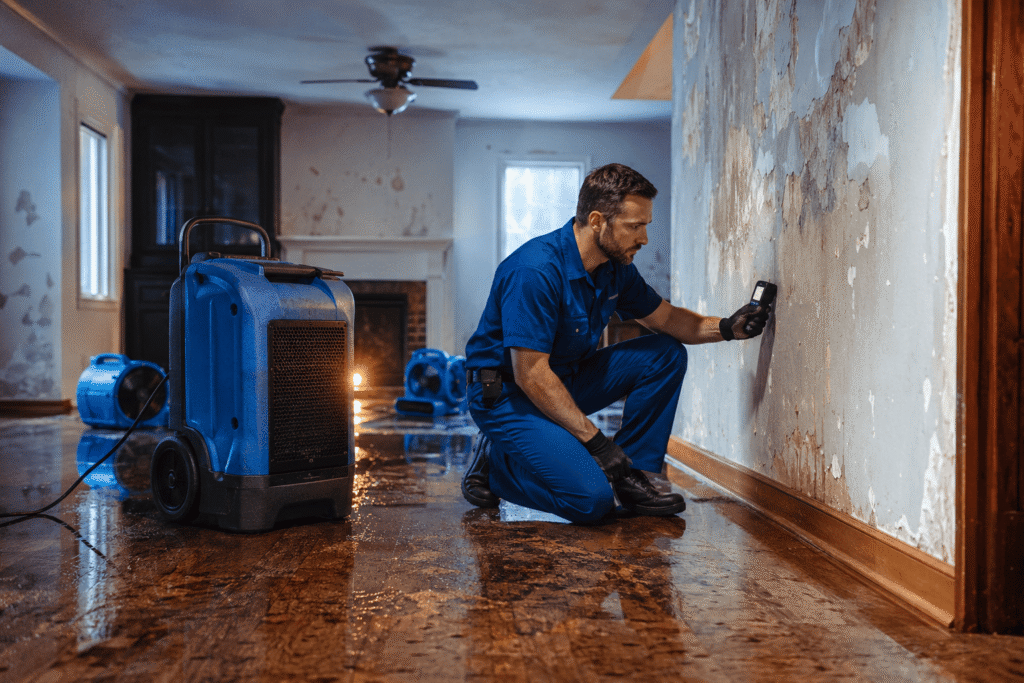
From the moment water enters your home to the final coat of paint here’s exactly what happens, when it happens, and why the clock matters.
Water damage is one of the most disruptive events a homeowner can face. Whether it’s a burst pipe at 2 a.m., a flooded basement after heavy rain, or storm damage, the first question nearly everyone asks is the same: “How long is this going to take?”
The honest answer depends on several variables severity, affected materials, moisture levels, and how quickly you respond. But one thing is certain: the faster professionals are on-site, the shorter and less expensive the restoration will be. In this guide, we walk you through every phase of the water damage restoration process so you can set realistic expectations and make informed decisions.
Key Takeaway: Flood damage restoration projects can range from a few days to several weeks depending on the extent of the flooding and the condition of the affected materials. For severe events involving standing water, contaminated floodwater, or structural moisture, professional flood damage restoration is often necessary to fully dry, sanitize, and restore the property.
Why Acting Within 24 Hours Is Critical
Water does not sit still. Within the first hour, it seeps into drywall, sub-flooring, insulation, and behind baseboards. By the 24-hour mark, mold can begin to develop in hidden cavities and by 48 hours, structural damage accelerates. This is why reputable restoration companies offer 24/7 emergency response.
According to the Institute of Inspection, Cleaning and Restoration Certification (IICRC) the national standard-setting body for restoration professionals – water damage is classified into four categories and four classes that directly determine how long remediation takes.
If you’re in a neighboring region and dealing with a flooding emergency right now, the team at Lake Charles LA Water Damage offers rapid-response restoration services and can help you assess damage categories immediately.
The Full Water Damage Restoration Timeline
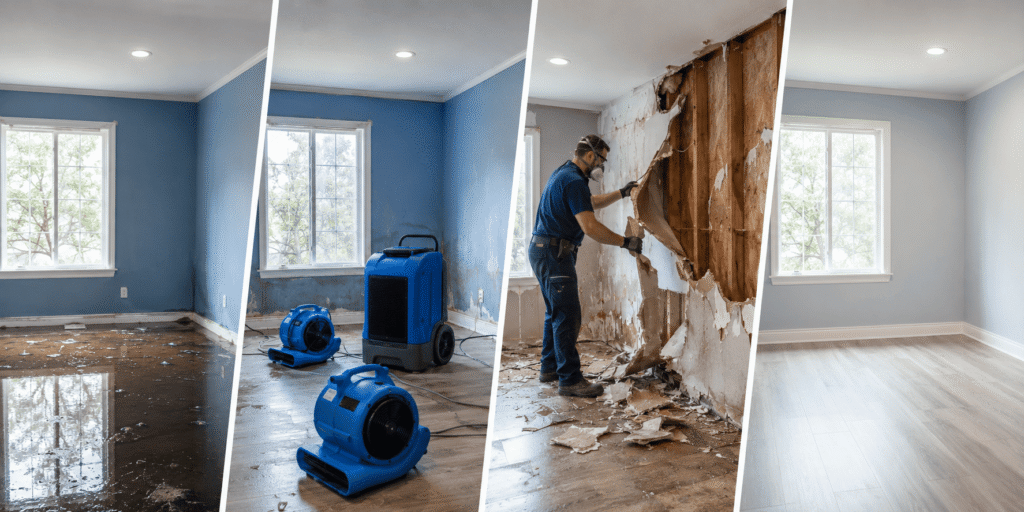
Here is a phase-by-phase breakdown of what the restoration process looks like and how long each stage realistically takes:
Phase 1: Emergency Response & Water Extraction
A certified technician arrives, assesses the damage using moisture meters and thermal imaging, and begins extracting standing water with truck-mounted extraction units. For most residential flooding events, extraction takes 1–4 hours. The source of water is also identified and stopped at this stage.
Phase 2: Damage Assessment & Documentation
A full moisture mapping report is created. This is critical for insurance claims. Technicians document affected areas, photograph damage, and prepare a detailed scope of work. This typically happens on the same day as extraction or the morning after.
Phase 3: Controlled Demolition (If Needed)
Saturated drywall, flooring, and insulation that cannot be dried in place are removed. This “tear-out” stage feels alarming, but it’s necessary to prevent mold growth inside walls. Demo typically takes 1–3 days depending on the affected square footage.
Phase 4: Structural Drying
Industrial air movers, dehumidifiers, and desiccant systems run continuously often 24 hours a day to bring moisture levels in structural materials down to acceptable levels (below 16% for wood, for example). This is the longest phase. Technicians revisit daily to check readings and adjust equipment.
Phase 5: Mold Prevention & Treatment
Once drying goals are achieved, antimicrobial agents are applied to all affected surfaces. If mold colonization is already present, a full remediation protocol is triggered which can add 3–7 days depending on the extent of growth.
Phase 6: Reconstruction & Repairs
Once the structure is certified dry, rebuild begins. This includes drywall installation, insulation, flooring, painting, trim work, and cabinetry as needed. Complex restorations involving multiple rooms or specialty materials like hardwood floors or tile can push this phase out several weeks.
Key Factors That Affect Restoration Time
No two water damage events are identical. The following variables are the most significant drivers of how long your specific project will take:
Water Category
Clean water (Category 1) from supply lines dries fastest. Greywater (Category 2) and sewage/blackwater (Category 3) require more extensive decontamination, adding days to the process
Affected Square Footage
A single bathroom flood may resolve in 3–5 days. Full basement flooding covering 1,000+ sq ft can take 2–3 weeks, especially if walls and framing are saturated.
Building Materials
Hardwood floors, concrete slabs, plaster walls, and foam insulation hold moisture much longer than standard drywall and carpet, significantly extending drying time.
Temperature & Humidity
Spokane’s high-humidity seasons can slow evaporation. Professional dehumidifiers counteract this, but outdoor conditions still influence drying rates inside the structure.
Response Time
Every hour of delay allows water to migrate further. A leak caught in 2 hours may need 3 days to restore. The same leak discovered 48 hours later may require 2 weeks of work.
Insurance & Permitting
Insurance adjuster scheduling and permit requirements for structural repairs can add days to the administrative side of a project a factor often overlooked.
What You Should Do While Waiting for Professionals
Once you’ve called a restoration company, there are safe steps you can take to minimize damage before the crew arrives:
- Shut off the water source – Know where your main shut-off valve is before an emergency.
- Turn off electricity to any affected areas if it is safe to do so.
- Move valuables and furniture off wet flooring to prevent staining and further saturation.
- Open windows if outdoor humidity is low – but do not use household fans, as they can spread mold spores.
- Document everything with photos and video before anything is moved for your insurance claim.
The Federal Emergency Management Agency (FEMA) provides free post-flood safety guidance that homeowners should review, especially if floodwaters entered from outside sources.
Drying Standards: What “Dry” Actually Means
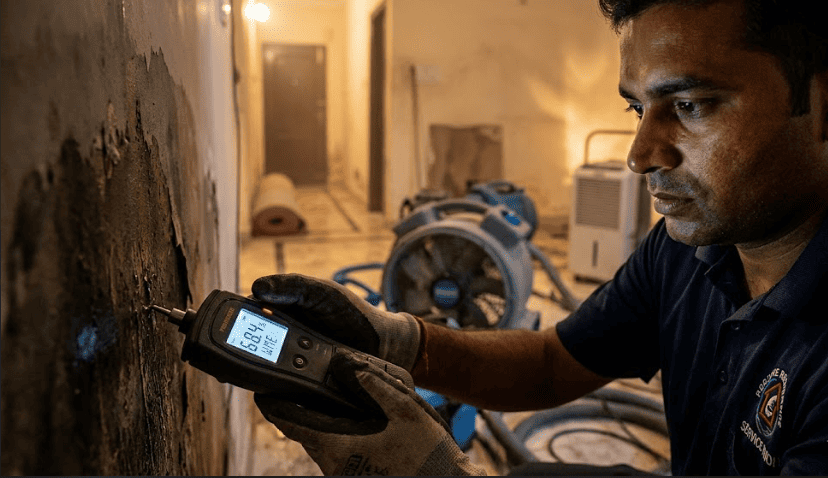
One of the most common misconceptions homeowners have is that surfaces that look or feel dry are actually dry. Professional restoration uses calibrated moisture meters and thermal imaging cameras to detect hidden moisture in wall cavities, under tile, inside structural members, and beneath subfloors.
The IICRC S500 standard defines acceptable moisture content levels for different building materials. Restoration is not complete until all materials read within those standards a process that cannot be rushed. Attempting to close up walls before structural components are truly dry is one of the most common causes of mold outbreaks following water damage events.
Pro Tip: Ask your restoration contractor for a daily moisture log during the drying phase. Reputable companies including Lake Charles LA Water Damage provide written moisture readings at every visit so you have a complete record for your insurer.
How Water Damage Affects Different Rooms
Basement Flooding
Basements are the most time-intensive area to restore. Concrete foundation walls and slabs hold moisture for extended periods. Expect a full restoration to take 10–21 days when basement flooding is involved, especially if finished walls, carpet, or a drop ceiling was present.
Kitchen & Bathroom Water Damage
Kitchens and bathrooms have tile, cabinets, and appliances that complicate moisture removal. Sub-floor saturation under tile is particularly common and difficult to dry. Plan for 5–14 days depending on penetration depth.
Upstairs Leaks & Ceiling Damage
Water from upper floors travels down through insulation and into ceiling drywall. The visible damage (ceiling stain, bulging drywall) often underrepresents how far moisture has spread laterally. These projects typically resolve in 5–10 days once the source is fixed.
Choosing the Right Restoration Company in Spokane
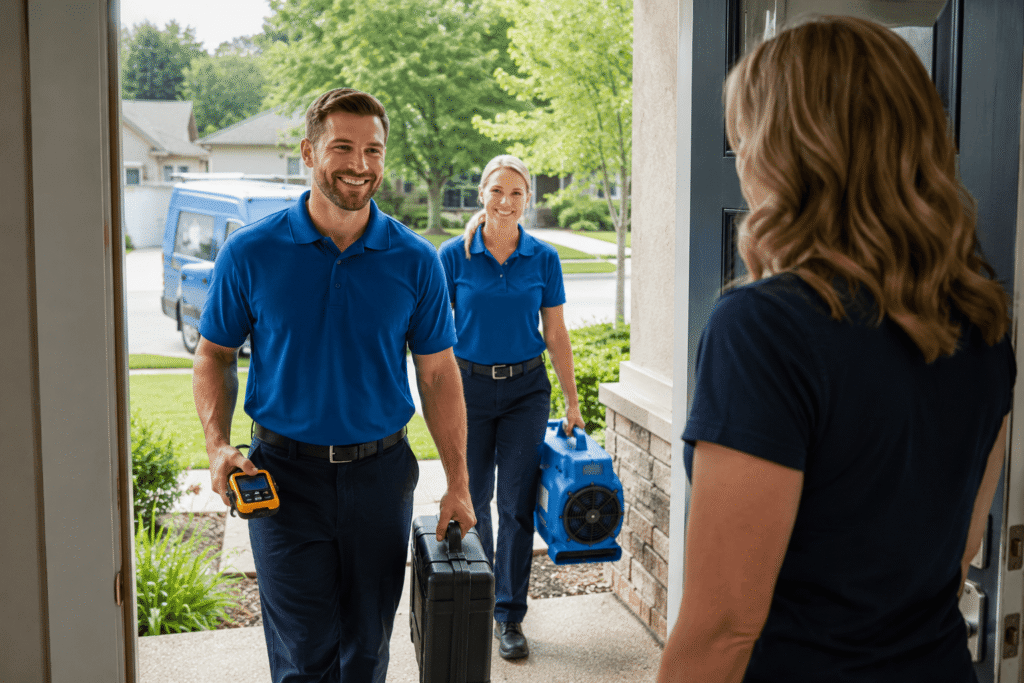
Not all restoration companies are equal. When evaluating contractors for water damage repair in Spokane, WA, look for these certifications and qualities:
- IICRC Certification – The gold standard for water damage restoration professionals.
- 24/7 Emergency Availability – Water damage doesn’t wait for business hours.
- Insurance Billing Experience – A company that works directly with adjusters can save you significant out-of-pocket costs.
- Written Moisture Logs – Transparency in daily drying progress is a sign of professionalism.
- Licensed, Bonded & Insured – Non-negotiable for any contractor entering your home.
At Spokane Water Damage Restoration, our certified team responds within 60 minutes of your call, documents every step for your insurer, and doesn’t consider the job done until your moisture readings meet IICRC standards not when the surfaces look dry.
Frequently Asked Questions
Can I stay in my home during water damage restoration?
In many cases, yes especially if damage is isolated to one area. However, if sewage is involved, mold is present, or structural integrity is compromised, temporary relocation is strongly advised. Your restoration company should give you a clear answer based on the assessment.
Will my homeowner’s insurance cover water damage?
Most standard homeowner’s policies cover sudden and accidental water damage (like burst pipes) but exclude flooding from natural sources and gradual leaks. Always call your insurer immediately after discovery. Professional restoration companies can work directly with your adjuster and help you document the claim accurately.
How do I know when drying is truly complete?
Drying is complete when all affected materials reach their equilibrium moisture content (EMC) a measurable target set by the IICRC S500 standard. Your technician will provide a final moisture log as documentation before reconstruction begins.
What happens if water damage is left untreated?
Untreated water damage leads to mold growth within 24–48 hours, progressive structural deterioration, electrical hazards, and significantly higher repair costs. What might cost $2,000–$5,000 if treated quickly can escalate to $20,000+ in structural repairs if ignored for weeks.
Final Thoughts
Water damage restoration is a multi-phase process with a timeline that cannot always be compressed but it can be minimized with fast action and the right professionals. Understanding the phases, knowing what questions to ask, and calling a certified restoration team immediately are the three most impactful things you can do when water damage strikes.
Whether you’re facing a small pipe leak or a full-scale basement flood, the team at Spokane Water Damage Restoration is ready to respond, restore, and rebuild with transparency at every step.
Water Damage in Spokane? Don’t Wait.
Every hour matters. Our IICRC-certified team is available 24/7-call now for a free assessment and same-day emergency response. Call Now – (509) 123-4567 24/7 Emergency
Leave a Reply