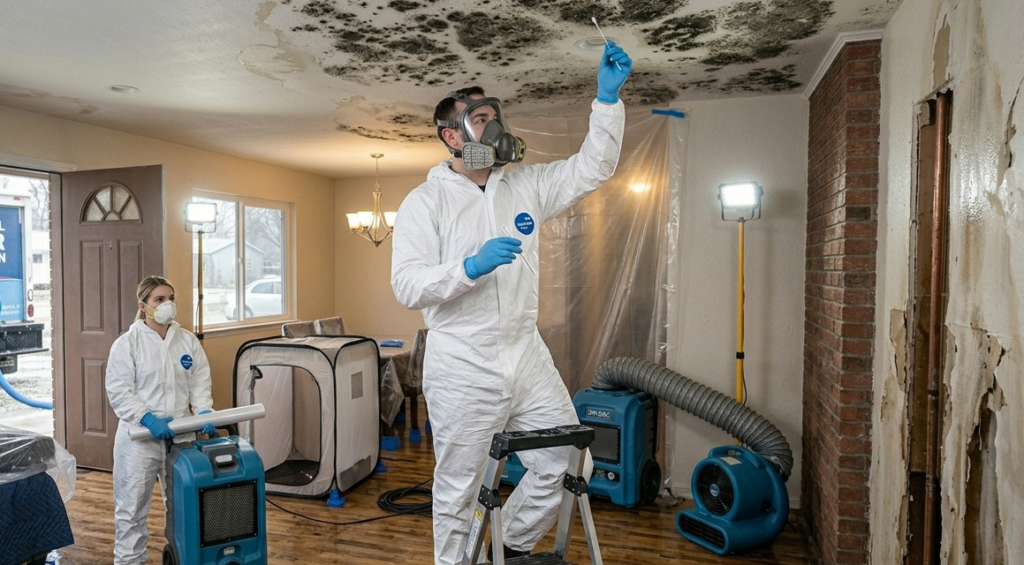
Mold can take hold in your Akron home in as little as 24 hours after water damage. Here’s exactly how to stop it step by step.
Whether it was a burst pipe, a flooded basement, or a roof leak from one of Ohio’s heavy spring storms, water damage leaves behind more than just soggy floors and damaged drywall. It creates the perfect breeding ground for mold and once mold takes hold, the cleanup costs and health risks multiply fast.
At Water Damage Restoration Spokane, we respond to hundreds of water damage calls across Summit County every year. The single biggest mistake we see homeowners make is waiting too long to address moisture and paying for mold remediation that could have been entirely prevented.
This guide walks you through exactly what to do, step by step, from the moment water enters your home to the long-term prevention strategies that keep mold from ever coming back.
1. Why Mold Is So Dangerous After Water Damage
Mold is not just a cosmetic problem. According to the Centers for Disease Control and Prevention (CDC), mold exposure causes upper respiratory tract symptoms, coughing, wheezing, and worsened asthma — particularly in children, the elderly, and anyone with a compromised immune system.
Beyond health effects, mold aggressively destroys the materials it grows on. Drywall, insulation, wood framing, and carpet padding can all become structurally compromised within days of untreated water damage. What starts as a $500 drying job can become a $15,000 mold remediation project if ignored.
There are three things mold needs to thrive: moisture, a food source (like drywall or wood), and oxygen. You can’t remove oxygen from your home, and building materials provide endless food. That means controlling moisture is the only lever you have and it has to happen fast.
2. The 24–48 Hour Window: Why Speed Is Everything
This timeline is the single most important thing to understand about post-flood mold prevention:
| Time After Water Exposure | What’s Happening | Risk Level |
|---|---|---|
| 0–6 Hours | Water absorbs into porous materials; structural damage begins | Moderate |
| 6–24 Hours | Drywall, wood framing, and insulation begin to swell; mold spores activate | High |
| 24–48 Hours | Mold begins visible colonization; bacterial growth in contaminated water | Critical |
| 48–72 Hours | Mold spreads beyond the initial damage zone; structural integrity threatened | Severe |
| 1 Week+ | Full mold remediation required; potential structural demolition needed | Emergency |
If you’ve experienced flooding or significant water intrusion in your Akron home, contact our 24/7 emergency water damage team right away. Every hour counts.
3. Immediate Steps: The First 6 Hours
The actions you take in the first few hours after discovering water damage are the most critical. Here is your immediate response checklist:
1. Stop the Water Source
Locate and shut off the source immediately. For plumbing failures, turn off the main water valve. For roof leaks or storm flooding, place tarps or buckets and call a roofer. You cannot begin drying until water entry is stopped.
2. Cut Power to Affected Areas
Water and electricity are a lethal combination. Switch off the circuit breaker for any flooded rooms before entering. Do not turn power back on until an electrician clears the area as safe.
3. Document Everything for Insurance
Before moving anything, photograph and video every affected area thoroughly. Take photos of water lines on walls, soaked materials, and damaged belongings. This documentation is essential for your homeowner’s insurance claim. Learn more about filing a water damage claim in Ohio.
4. Remove Standing Water Immediately
Use wet-dry vacuums, pumps, or mops to extract as much standing water as possible. Do not use a standard household vacuum it will be damaged and can create an electrical hazard. The faster standing water is removed, the lower your mold risk.
5. Move Wet Items Outside or to a Dry Area
Rugs, furniture, clothing, and other porous items that have absorbed water should be moved out of the flooded space immediately. Damp items left in enclosed rooms dramatically accelerate mold growth.
6. Open Windows and Increase Airflow (Weather Permitting)
If outdoor humidity is lower than indoor humidity, open windows and doors to increase air circulation. In Ohio winters or during humid summer days, this can backfire use fans instead to circulate air without bringing in outside moisture.
4. How to Properly Dry Your Home
Removing standing water is just the beginning. The real challenge is eliminating moisture from building materials that have absorbed water drywall, subfloor, wall cavities, and wood framing. This is called structural drying, and it requires more than a few box fans.
The Right Tools for Structural Drying
- Industrial dehumidifiers — These are far more powerful than consumer units. A professional LGR (Low-Grain Refrigerant) dehumidifier can remove 150+ pints of water per day from the air, versus 30–50 pints for a typical hardware store model.
- High-velocity air movers — These direct powerful airflow across wet surfaces, dramatically accelerating evaporation from floors, walls, and ceilings.
- Moisture meters — Essential for monitoring drying progress inside walls and under flooring where you can’t see.
- Thermal imaging cameras — Used by professionals to locate hidden pockets of moisture behind walls and under floors before mold has a chance to form.
Target Humidity Levels
According to the U.S. Environmental Protection Agency (EPA), indoor relative humidity should be kept below 60% to prevent mold growth and ideally between 30% and 50%. After water damage, your goal is to get the affected areas to these levels as quickly as possible.
Don’t Forget These Commonly Missed Areas
- Under kitchen and bathroom cabinets
- Inside wall cavities near the water source
- Beneath hardwood and laminate flooring
- Inside HVAC ducts and air handlers (mold here spreads spores throughout your entire home)
- Crawl spaces and basement rim joists
- Insulation inside walls (often needs full replacement when wet)
5. Which Materials to Save and Which to Remove
Not everything can be dried and saved. Knowing what to keep versus what to discard is essential to preventing mold from surviving the cleanup process.
| Material | Can It Be Saved? | Action |
|---|---|---|
| Hardwood flooring | Sometimes | Dry immediately with air movers; may cup or warp assess after drying |
| Drywall (gypsum board) | Rarely if soaked | If wet more than 24 hours, remove 12″+ above waterline |
| Carpet | Sometimes (clean water only) | Remove and dry within 24 hours; replace padding regardless |
| Carpet padding | No | Always remove and replace it retains moisture and mold |
| Insulation (fiberglass batt) | No | Remove and replace retains moisture even when apparently dry |
| Solid wood furniture | Yes | Dry immediately, clean with antimicrobial solution |
| Particle board / MDF | No | Absorbs water rapidly and swells; replace |
| Concrete block / tile | Yes | Non-porous; clean and dry thoroughly |
If you’re unsure what can be salvaged in your specific situation, our water damage assessment team can conduct a professional evaluation and help you make informed decisions before mold becomes the bigger problem.
6. Cleaning and Disinfecting Affected Areas
Once an area is physically dry (confirmed with a moisture meter, not just by touch), it needs to be properly cleaned and disinfected to kill any mold spores that may have begun to colonize.
Safe DIY Cleaning for Small Areas
The EPA advises that homeowners can handle mold cleanup themselves if the affected area is less than 10 square feet roughly a 3×3 patch. For anything larger, or any situation involving HVAC systems or sewage water, professional remediation is required.
For small, contained areas on hard, non-porous surfaces:
- Wear an N-95 respirator, protective gloves, and goggles
- Mix one cup of household bleach per gallon of water, or use a commercial antimicrobial solution
- Scrub visible mold with a stiff brush, then apply the cleaning solution
- Allow the solution to sit for 10–15 minutes before wiping and rinsing
- Dry the area immediately and thoroughly after cleaning
When to Use Antimicrobial Treatments
Professional restoration companies apply EPA-registered antimicrobial treatments to affected framing, subfloors, and wall cavities after drying is complete. These treatments inhibit future mold growth even if any trace moisture remains. This is a standard part of our mold remediation services in Akron and is worth requesting from any contractor you hire.
7. Finding Hidden Moisture Before Mold Does
One of the most dangerous aspects of water damage is that you can’t always see where the moisture went. Water travels fast, wicking up drywall through capillary action and spreading under flooring far from the original source. Many mold problems show up months after a water event because hidden moisture was never addressed.
Warning Signs of Hidden Moisture
- A musty smell in a room, especially after the home heats up
- Wallpaper or paint that is bubbling, peeling, or blistering
- Floors that feel soft or slightly spongy underfoot
- Discoloration, dark spots, or watermarks on ceilings or walls
- Increased allergy or asthma symptoms among household members
- Visible condensation on walls in heated rooms
Professional Detection Tools
Our technicians use thermal imaging cameras and non-invasive moisture meters to locate hidden moisture inside wall cavities, under tile, and beneath flooring without tearing anything open unnecessarily. This technology is the single most effective way to confirm that drying is complete before reconstruction begins.
If you smell mold but can’t find it, or if you suspect moisture was missed during a prior cleanup, contact us for a moisture inspection before the problem gets worse.
8. Long-Term Mold Prevention for Akron Homeowners
Preventing mold isn’t just a post-flood task. Ohio’s climate with high humidity in summer, freeze-thaw cycles in winter, and significant rainfall year-round means ongoing home maintenance is your best defense against future water damage and mold.
Maintain Your Home’s Drainage System
- Clean gutters and downspouts at least twice per year (spring and fall)
- Ensure downspouts direct water at least 6 feet away from your foundation
- Grade soil away from the foundation to prevent pooling during heavy rain
- Inspect your sump pump before Ohio’s spring thaw season every year
Control Indoor Humidity
- Use exhaust fans in bathrooms and kitchens during and after use
- Run a whole-house dehumidifier in basements during Ohio’s humid summer months (aim for 45–50% relative humidity)
- Vent clothes dryers to the outside never into an attic or crawl space
- Check that your HVAC system is properly sized and maintained; an oversized AC unit short-cycles and leaves too much humidity in the air
Inspect and Maintain Plumbing
- Replace washing machine hoses every 5 years (braided stainless steel hoses are worth the upgrade)
- Inspect under-sink plumbing connections annually for slow drips
- Know where your main water shutoff is and ensure all household members do too
- Consider installing smart water leak detectors near appliances, water heaters, and under sinks
Winterize Before Ohio Winters
Akron winters are tough on plumbing. Frozen pipes are one of the leading causes of sudden, catastrophic water damage. Before temperatures drop, insulate exposed pipes in unheated spaces, keep your thermostat no lower than 55°F even when away, and let faucets drip during severe cold snaps. Our guide to burst pipe cleanup in Akron covers what to do if the worst happens.
9. When to Call a Professional Restoration Company
There are situations where DIY mold prevention simply isn’t sufficient and where attempting it yourself can actually make the problem worse by spreading spores to unaffected areas.
Call a certified restoration professional immediately if:
- The affected area is larger than 10 square feet
- The flooding involved sewage or “black water”
- You see or smell mold after attempting DIY cleanup
- Water has been present for more than 24–48 hours before cleanup began
- The damage involves HVAC systems, ductwork, or air handlers
- Any household member has asthma, respiratory conditions, or a compromised immune system
- The water damage affected structural elements like floor joists, wall studs, or the roof structure
- You’re unsure whether the area has dried completely
Our Akron water damage restoration team is IICRC-certified and available 24 hours a day, 7 days a week. We use industrial drying equipment, thermal imaging, and EPA-registered antimicrobial treatments to ensure your home is genuinely safe not just visually clean.
Frequently Asked Questions
How quickly does mold grow after water damage?
Mold can begin growing within 24 to 48 hours of water exposure under the right conditions warmth, moisture, and an organic food source like drywall or wood. Visible mold colonies typically appear within 1–2 weeks, but by that point the mold has usually been present for some time. This is why immediate drying is so critical.
Can I use bleach to kill mold after a flood?
Bleach is effective on hard, non-porous surfaces like tile and concrete. However, it does not penetrate porous materials like drywall, grout, or wood meaning it kills surface mold but leaves the root structure (hyphae) alive inside the material. For porous building materials, the correct approach is physical removal or professional antimicrobial treatment, not surface bleaching.
Does homeowner’s insurance cover mold from water damage in Ohio?
It depends on the cause. If mold results from a sudden, accidental water event like a burst pipe or appliance failure most standard homeowner’s insurance policies will cover both the water damage and resulting mold remediation. However, if the mold results from long-term neglect, gradual leaks, or flooding from outside (which requires separate flood insurance), coverage is typically denied. Document everything and call your insurer immediately. Our team can assist with insurance documentation in Akron.
How do I know if my home has hidden mold after water damage?
The most reliable indicators are a persistent musty odor, unexplained respiratory symptoms among household members, or visual signs like discoloration, bubbling paint, or soft spots on walls and floors. Professional thermal imaging and moisture metering can locate hidden moisture before mold becomes visible. If you have any doubt, schedule an inspection rather than waiting for visible confirmation.
Is it safe to stay in my home during mold remediation?
For small, contained mold areas (under 10 sq ft), you can usually stay in unaffected parts of the home. For larger remediation projects, professional contractors typically establish containment barriers with negative air pressure to prevent spores from spreading. In cases of extensive mold or black mold (Stachybotrys), temporary relocation is often recommended, especially for children, elderly individuals, or those with respiratory conditions. Your restoration contractor and insurance company can help arrange temporary housing if needed.
Water Damage in Akron? Don’t Wait.
The longer you wait, the higher the risk of permanent mold damage. Our certified team responds fast 24/7, across Summit County and the greater Akron area .Get Emergency Help Now
Call (509) 508-5677 24/7 for water damage restoration Spokane Washington and complete service.
Leave a Reply