Introduction
Flood damage can strike homes and businesses across Spokane with little warning. Whether caused by heavy rainfall, rapid snowmelt, burst pipes, appliance failures, or sewer backups, water intrusion can quickly turn into a major property emergency. Beyond the obvious standing water, flood events often leave behind hidden moisture, structural concerns, and conditions that encourage mold growth.
Many homeowners are unsure what happens after the initial emergency response. Questions about drying, repairs, insurance claims, and restoration timelines can make an already stressful situation feel overwhelming. Understanding the cleanup process helps property owners make informed decisions and avoid costly mistakes.
At Spokane Water Damage, we’ve helped countless homeowners and businesses recover from flood-related disasters throughout the Spokane area. This guide explains what the flood damage restoration process actually looks like and what you can expect from start to finish.
Why Immediate Action Matters After Flood Damage
The first 24 to 48 hours following a flood are critical. Water spreads rapidly through porous building materials, including drywall, insulation, wood flooring, carpeting, and subfloors. The longer moisture remains inside a structure, the greater the risk of secondary damage.
Within hours, water can:
- Weaken drywall and structural materials
- Cause wood to swell and warp
- Damage electrical systems
- Create conditions for bacterial growth
- Increase the likelihood of mold development
Spokane’s seasonal weather patterns can also affect restoration timelines. During spring snowmelt and periods of high humidity, moisture may remain trapped inside building materials longer than expected, making professional drying especially important.
Step 1: Emergency Inspection and Damage Assessment
Every successful restoration project begins with a thorough inspection. Restoration technicians evaluate the extent of the damage and identify all affected areas, including those not immediately visible.
During the assessment phase, professionals typically:
- Identify the source of the water intrusion
- Determine the category of water contamination
- Measure moisture levels throughout the property
- Inspect walls, floors, ceilings, and crawl spaces
- Develop a customized restoration plan
Advanced moisture detection equipment helps locate hidden water behind walls, beneath flooring, and inside structural cavities. This process, often called moisture mapping, is essential because water frequently migrates far beyond the visibly affected areas.
Older homes in Spokane’s historic neighborhoods may require additional evaluation due to construction materials that absorb and retain moisture differently than modern building products.
Step 2: Water Extraction and Removal
Once the assessment is complete, the next priority is removing standing water as quickly as possible.
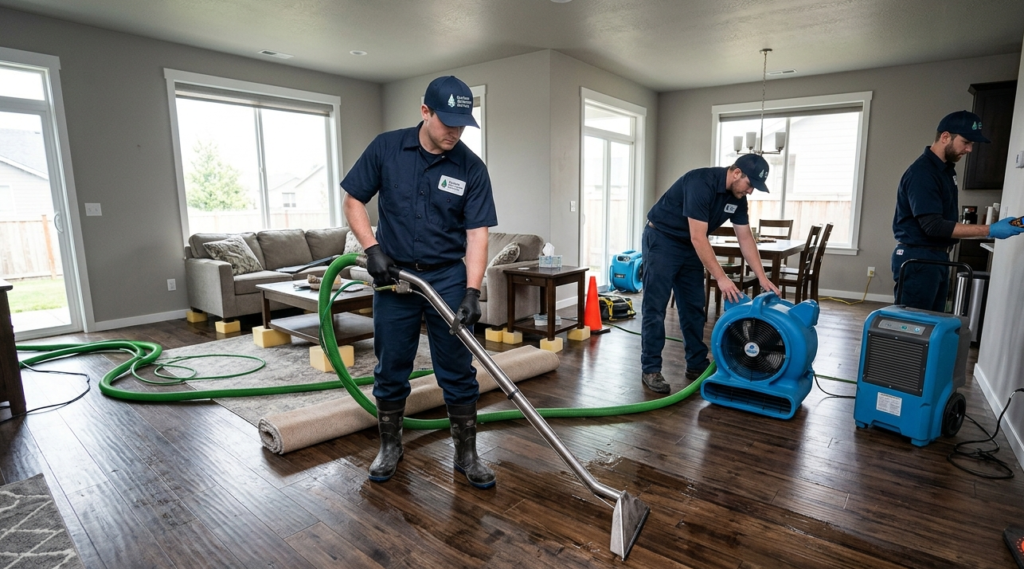
Professional restoration companies use industrial-grade extraction equipment capable of removing thousands of gallons of water efficiently. Depending on the severity of the flooding, technicians may use:
- Submersible pumps
- Truck-mounted extraction systems
- Commercial wet vacuums
- Specialized floor extraction tools
Rapid water removal significantly reduces drying time and helps prevent additional structural deterioration.
Many homeowners underestimate the amount of water hidden beneath flooring, inside wall cavities, and under cabinets. Surface drying alone is rarely sufficient after significant flooding.
Step 3: Removal of Unsalvageable Materials
Not every material can be safely restored after flood exposure. Certain building components absorb water quickly and may need removal to prevent future problems.
Common materials that often require replacement include:
- Saturated drywall
- Water-damaged insulation
- Contaminated carpeting and padding
- Warped laminate flooring
- Severely damaged baseboards
Professional drywall removal and replacement frequently becomes necessary when moisture penetration exceeds safe levels. Removing compromised materials allows technicians to access hidden moisture and thoroughly dry the structure.
Properties affected by contaminated floodwater may require more extensive demolition to eliminate health risks associated with bacteria, sewage, or other pollutants.
Step 4: Structural Drying and Dehumidification
After water extraction, the drying phase begins. This is often the longest and most important stage of the restoration process.
Industrial air movers and commercial dehumidifiers work together to remove moisture trapped inside building materials. Technicians carefully monitor environmental conditions and adjust equipment placement throughout the process.
Effective structural drying involves:
- Reducing indoor humidity levels
- Promoting airflow across wet surfaces
- Removing moisture from structural components
- Preventing condensation buildup
One important industry secret is that drying success depends more on humidity control than simply placing fans throughout a room. Without proper dehumidification, moisture can remain trapped behind walls and beneath flooring, creating ideal conditions for mold growth.
Daily moisture readings help confirm that drying goals are being achieved and ensure no hidden pockets of moisture remain.
Step 5: Cleaning and Sanitization
Floodwater often contains contaminants that require professional cleaning and disinfection. Even clean water sources can become hazardous if left untreated for extended periods.
Restoration teams typically perform:
- Surface cleaning
- Antimicrobial treatments
- Odor removal procedures
- Air quality improvement measures
- Sanitization of affected areas
If the flooding originated from sewage backups, stormwater intrusion, or other contaminated sources, additional cleaning protocols may be necessary to restore a safe living environment.
Professional-grade antimicrobial products help reduce bacterial growth while minimizing the risk of future microbial contamination.
Step 6: Mold Prevention and Monitoring
One of the biggest concerns after any flood event is mold growth. Mold can begin developing within 24 to 48 hours under favorable conditions, particularly when moisture remains hidden inside building materials.
To minimize mold risks, restoration professionals:
- Monitor moisture levels continuously
- Apply antimicrobial treatments
- Remove contaminated materials
- Verify drying completion through testing
Homeowners should avoid assuming a property is dry simply because surfaces feel dry to the touch. Hidden moisture frequently remains behind walls, under flooring, and inside insulation.
Regular moisture testing throughout the restoration process is essential for preventing future mold remediation costs.
Step 7: Repairs and Property Restoration
Once drying and cleaning are complete, reconstruction can begin. The extent of repairs depends on the severity of the flood damage.
Restoration work may include:
- Drywall replacement
- Flooring installation
- Painting and finishing
- Trim and baseboard replacement
- Cabinet repairs
- Structural rebuilding
Many homeowners choose to upgrade materials during this stage to improve future flood resistance. Water-resistant flooring products and moisture-resistant drywall can provide additional protection against future incidents.
For extensive damage, reconstruction may occur in phases to ensure quality workmanship and proper moisture control throughout the rebuilding process.
Common Flood Cleanup Mistakes Homeowners Make
Several mistakes can significantly increase restoration costs and recovery time.
Delaying Professional Assistance
Waiting several days before contacting a restoration company allows moisture to spread deeper into the structure and increases the likelihood of mold growth.
Attempting DIY Drying
Household fans and portable dehumidifiers rarely provide enough drying power for significant flood damage. Hidden moisture often remains undetected.
Discarding Documentation
Insurance claims require thorough documentation. Always photograph affected areas before cleanup begins whenever it is safe to do so.
Ignoring Moisture Testing
Visual inspections alone cannot confirm complete drying. Professional moisture monitoring is essential for preventing long-term issues.
Choosing Professional Flood Damage Restoration in Spokane
Flood damage restoration requires specialized equipment, technical expertise, and local experience. Spokane properties face unique environmental challenges, including seasonal flooding, snowmelt events, and fluctuating humidity levels that can complicate the drying process.
Working with a qualified local restoration company ensures every phase of recovery is handled correctly—from emergency extraction through final reconstruction.
If you’re dealing with water intrusion, learn more about our professional Flood Damage Restoration services in Spokane and how our team can help protect your property from long-term damage.
Conclusion
Flood damage restoration is a detailed process that extends far beyond removing standing water. Proper inspection, extraction, drying, cleaning, and reconstruction are all essential for protecting your property and preventing future problems.
Understanding what the cleanup process actually looks like helps homeowners make informed decisions during a stressful situation. Fast action and professional restoration services can significantly reduce repair costs while safeguarding your home’s structural integrity and indoor air quality.
Need help with flood damage restoration in Spokane? Contact Spokane Water Damage today at (509) 508-5677 for professional assistance and rapid emergency response.
Leave a Reply