
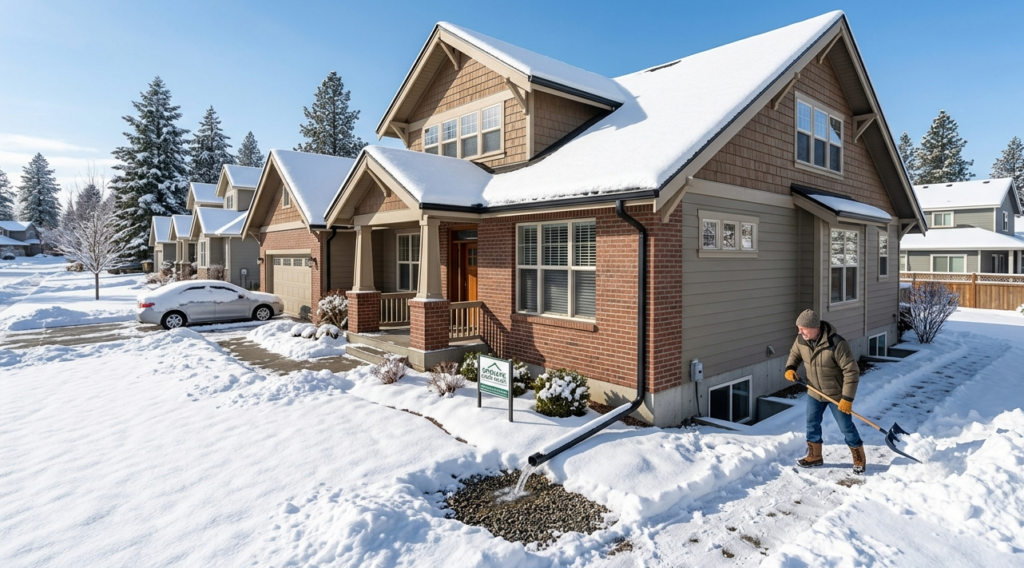
Winter Flood Prevention in Spokane: Protect Your Home from Frozen Pipes and Snowmelt
As the chill of Spokane winters sets in, residents brace for more than just snow-covered streets and icy winds. The Inland Northwest’s harsh climate brings a hidden threat: flood damage from frozen pipes, rapid snowmelt, and heavy precipitation – and if you’ve ever watched water pour through a burst line or seen your basement flood after a spring thaw, you know exactly how devastating it can be.
Basement flooding Spokane is one of the most common calls we receive every winter and spring. Whether you’re dealing with pipe freezing Lake Balboa, a burst line in Mead, or sudden pooling in your crawlspace in Cheney, the damage can escalate within hours. At Spokane Water Damage Restoration, we specialize in Spokane flooding repair and have helped hundreds of homeowners across the Inland Northwest recover from seasonal water disasters – but prevention is always better than cure.
In this guide, we’ll walk you through practical, actionable steps for winter flood prevention, tailored specifically to our unique climate. And if the worst does happen, our flood damage restoration team is available 24/7 to respond fast.
Need immediate help? Call our emergency team any time at (509) 508-5677.
Understanding Winter Flood Risks in Spokane
Spokane’s winters are notorious for their mix of freezing temperatures and sudden thaws – a combination that creates perfect conditions for flooding. With average snowfall exceeding 50 inches annually and rapid temperature swings driven by Chinook wind events, even well-maintained homes can become vulnerable.
The Danger of Frozen Pipes and Pipe Freezing in Lake Balboa
Frozen pipes are one of the leading causes of winter water damage across Spokane and surrounding areas. When temperatures drop below 20°F – as they regularly do in January – water inside pipes expands as it freezes, leading to cracks or full bursts. Pipe freezing in Lake Balboa is especially common due to the area’s older housing stock and exposed supply lines in unheated spaces like garages and crawlspaces.
Local factors amplify the risk across the city: homes in Millwood built in the mid-20th century often have uninsulated pipes running through attics or exterior walls. A slow freeze you don’t notice can turn into a burst pipe and major basement flooding in Spokane within a matter of hours
When a pipe does burst, the resulting water intrusion often affects drywall, flooring, insulation, and other structural materials. The cleanup and recovery process is very similar to what property owners experience during professional flood damage restoration projects, where rapid drying and moisture control are essential.
Snowmelt Flooding and Drainage Overload
Come late February or March, Spokane’s snowpack begins to melt – especially after warm Chinook winds roll in from the west. This rapid runoff overwhelms drainage systems and can flood basements and yards if your property isn’t properly graded. In neighborhoods like Cheney, where clay-heavy soils don’t absorb water well, even a moderate melt can cause dangerous pooling against your foundation.
Spokane flooding repair calls spike every spring for exactly this reason. Homeowners who didn’t prepare their drainage systems in fall often face flooded basements and saturated crawlspaces just as the weather starts to warm. The damage from snowmelt flooding is often just as severe as storm flooding – and is treated the same way by our flood damage restoration specialists.
Essential Preventive Measures for Your Home
Protecting your property starts with simple, cost-effective steps taken before the cold arrives. Here’s what we recommend based on years of responding to basement flooding in Spokane and Spokane flooding repair calls every season.
1. Frozen Pipe Protection and Insulation
Insulation is your first line of defense – especially for homes in older neighborhoods or areas prone to pipe freezing, like Lake Balboa and Millwood.
- Seal exposed pipes: Use foam pipe sleeves or heat tape in unheated areas like garages, basements, and crawlspaces.
- Install heat cables: For homes in Opportunity and other areas with extreme cold exposure, UL-listed heat cables that activate automatically when temperatures dip are a smart investment.
- Improve indoor airflow: Keep cabinet doors under sinks open during cold nights so warm air can circulate around supply lines.
- Outdoor prep: Disconnect and drain all outdoor hoses before the first frost in November and shut off outdoor spigots from the interior valve.
If a pipe does freeze and burst, the water damage that follows is typically extensive – soaked drywall, warped flooring, and saturated insulation. Our flood damage restoration team handles burst pipe flooding as a priority emergency and responds within the hour across Spokane.
2. Maintain Gutters and Drainage Systems
Clogged gutters are a flood waiting to happen. Leaves from Spokane’s maples and needles from nearby evergreens can completely block flow, causing water to back up and seep into your walls or pool against your foundation.
- Clean twice yearly: Once in late fall before freeze-up, and once in early spring after snowmelt season.
- Extend downspouts: Direct water at least 5–10 feet away from your foundation. Short downspouts that dump water at the base of your home are one of the most common causes of basement flooding.
- Sump pump maintenance: In Mead, Cheney, and other areas with rolling terrain or high water tables, a properly maintained sump pump is essential. Test it before winter by pouring water into the pit – if it doesn’t kick on, get it serviced before the first hard freeze.
Drainage failures are one of the primary causes of the basement flooding in Spokane we respond to every winter. When the drainage system fails, water finds the path of least resistance – and that’s usually through your foundation wall or floor seam. If that happens, the cleanup process is a full flood damage restoration job, not just a mop-up.
3. Landscaping and Foundation Sealing
Your yard plays a surprisingly important role in winter flood prevention – especially during Spokane’s snowmelt season.
- Grade away from the foundation: The ground around your home should slope at least 6 inches over the first 10 feet away from the foundation. Flat or inward-sloping yards funnel snowmelt directly toward your basement walls.
- Choose native plantings: Plants like Idaho fescue have deep root systems that stabilize soil and absorb excess moisture during spring thaws.
- Seal foundation cracks now: Use hydraulic cement to seal any cracks in your foundation or around basement windows before winter. Even hairline cracks in older Millwood or Nevada/Lidgerwood homes can allow significant water intrusion when the ground is saturated.
- Permeable pavers: In urban lots, permeable driveways and walkways allow water to infiltrate the ground rather than sheeting off toward your foundation.
Emergency Preparedness: What to Do When Prevention Isn’t Enough
Even with perfect preparation, Spokane winters can overwhelm homes. Here’s how to respond when Spokane flooding repair becomes necessary rather than preventive.
Know your shut-off: Every adult in your household should know where the main water shut-off valve is and how to operate it. In a burst pipe event, shutting the water off within the first 5 minutes makes an enormous difference in the extent of damage.
Document before you clean: Before touching anything, take photos and video of all affected areas. Insurance claims for flood damage require documentation of the initial condition.
Don’t use fans on Category 2 or 3 water: If the flooding involved a backed-up drain, toilet overflow, or groundwater intrusion – not just a clean pipe burst – don’t use household fans. You can spread contaminated particles through the air. Call a professional immediately.
Call for professional flood damage restoration: What looks like a small amount of water on the surface is often just a fraction of what’s absorbed into subfloors, wall cavities, and insulation. Professional drying equipment removes moisture that household fans and dehumidifiers simply cannot reach. Our flood damage restoration specialists use industrial extractors, desiccant dehumidifiers, and moisture mapping to dry your home completely – not just on the surface.
Review your insurance: Standard homeowner’s policies may not cover all flood types. Groundwater intrusion and surface flooding from snowmelt is often excluded unless you carry separate flood insurance through the NFIP. Burst pipe damage is typically covered, but always call your insurer and your restoration company at the same time.
FAQ: Preventing Winter Floods in Spokane
How cold does it get in Spokane, and how does it affect flooding? Spokane winters regularly reach 0°F or below, causing deep ground freezes and widespread pipe freezing including in Lake Balboa and older neighborhoods throughout the city. When temperatures rise, rapid snowmelt floods basements and overwhelms drainage systems that were frozen solid just days before.
What should I do if my pipes freeze but don’t burst yet? Thaw them slowly using a space heater or warm towels – never an open flame. Keep the faucet dripping to release pressure as the ice melts. If you hear any cracking sounds or see bulging, shut off the main water supply and call us immediately at (509) 508-5677. A professional inspection can confirm whether a hidden crack is present before it becomes a full burst and a basement flooding emergency.
Is basement flooding in Spokane covered by insurance? It depends entirely on the source. Water damage from a burst pipe is almost always covered under standard homeowner’s insurance. Flooding from groundwater, snowmelt, or overland flow typically requires separate flood insurance. Our team works directly with insurance adjusters and can help you document your claim accurately.
Are sump pumps necessary for all Spokane homes? Not every home needs one, but homes in low-lying areas near the Spokane River, in Cheney’s clay-soil zones, or in Opportunity are strongly advised to have one. A battery-backup sump pump is especially important – power outages and severe storms often hit at the same time.
How often should I inspect my home for flood risks? Twice a year – once in late fall before freeze-up, and once in early spring before snowmelt season begins. If you’ve previously experienced Spokane flooding repair or water intrusion, an annual professional inspection is worth the investment.
Conclusion: Stay Proactive, Stay Protected
Basement flooding in Spokane and winter water damage don’t have to disrupt your life. By insulating your pipes (especially in freeze-prone areas like Lake Balboa), maintaining your gutters and drainage systems, sealing your foundation, and knowing exactly what to do when a pipe bursts, you can dramatically reduce your risk every season.
But when prevention isn’t enough – when the snowmelt comes faster than expected, a pipe fails overnight, or a storm overwhelms your drainage – Spokane flooding repair needs to happen fast. The longer water sits in your walls and subfloors, the more expensive and complex the restoration becomes.
Protect your home before winter hits. Call us today at (509) 508-5677 for a free consultation.
Leave a Reply